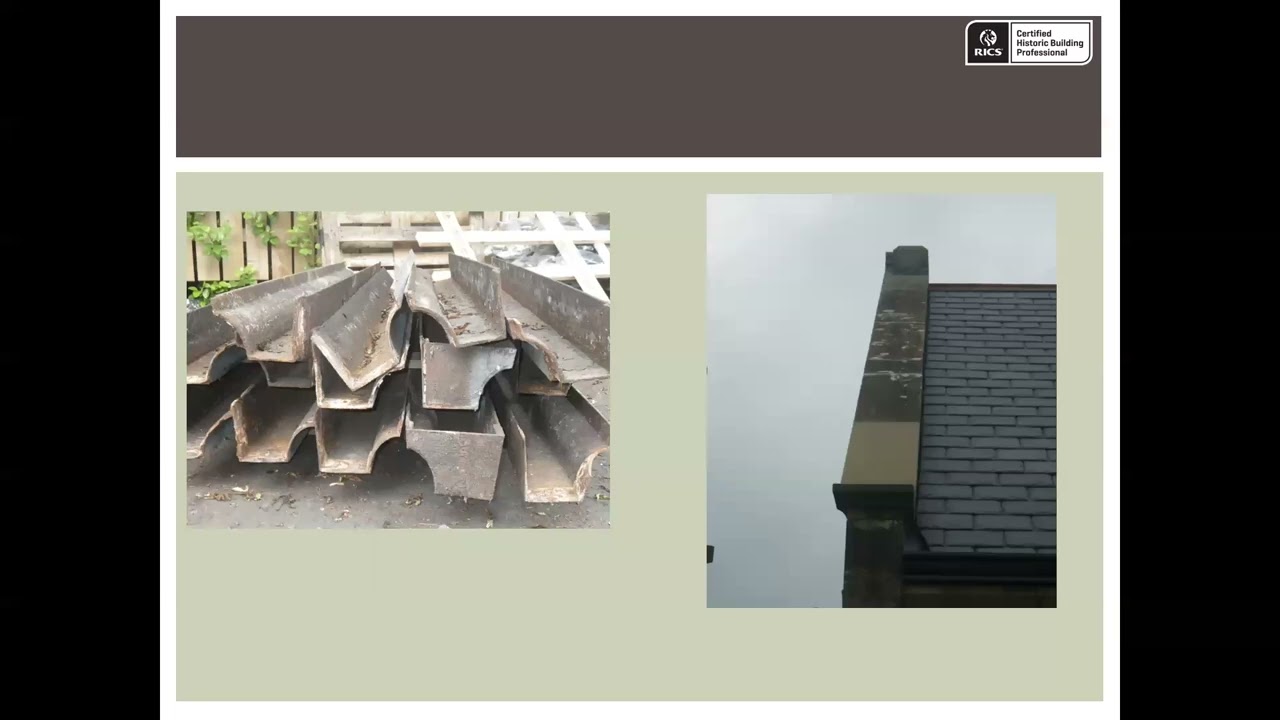
Regular maintenance is crucial for the roof, which is the most exposed area of a building. Even minor leaks can lead to severe problems if neglected. To ensure the building remains wind and watertight, it is essential to conduct repairs and inspections through a trained professional.
Replace any missing or damaged slates, and repair any damage to lead flashings at junctions, valleys, chimneys, dormers, or walls. Carefully salvage and set aside original slates for future use. Introduce replacement slates in less noticeable areas, reserving the originals for prominent sections. The new slates should closely match the original building material in type, color, texture, size, and thickness. Remove noticeably corroded nails and replace them with high-quality stainless steel nails.
Consider a full re-slating of the roof only when the roofing materials have reached their natural end of life or repairs are no longer cost-effective. As a guideline, if one-fifth or more of the slates need renewal, re-roofing should be considered
Chimneys are often overlooked but require regular inspection, even when they are no longer in use. Open chimneys can accumulate water from above, leading to dampness in the flue, especially if the chimney is only used intermittently. Installing chimney cowls can help prevent water ingress while allowing continued use of the chimney. Factors such as plant growth, weather, and impact damage can contribute to deterioration and potential collapse. If plant growth is present on a chimney stack, it indicates failing mortar joints and requires further inspection to prevent structural failure, which could result in costly repairs.
Capped and permanently closed chimneys, as well as sealed and unvented fireplaces, can trap moisture within the structure, leading to instability and damp patches inside the building. Opening closed chimneys and fitting vented caps can prevent water entry from above and provide ventilation for the chimney stack. Closed fireplaces should be equipped with vented grilles to ensure proper airflow.
Check for defects such as: